At Richer Resources, we are dedicated to the creation of high quality books, art and other media intended to enrich the lives of individuals of all ages.
As an independent publisher, we are bound by a sense of integrity and quality to produce products which enhance the lives and vision of individuals everywhere.
Sign up to receive notice of free eBooks, new releases and special subscriber-only offers.
(You can unsubscribe at any time)
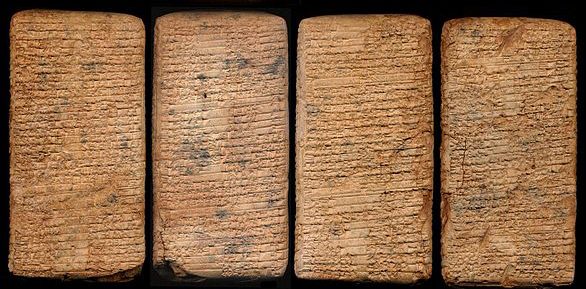
The World's First Known Author
Certainly we have writings older than the 23rd
century BCE, however, the specific authorship of these writings are unknown to us. Enter Enheduanna, the High Priestess of the goddess
Inanna and the moon god Nanna in the ancient city of Ur in southern
Mesopotamia. Her writings include devotions to Inanna and a
collection of hymns known as the "Sumerian Temple Hymns". Additional
texts are also ascribed to her. These found works make her the first
named author in world history.
While we won't endeavor to make anyone an expert on Enheduanna here,
a few (edited) excerpts from from her writing give us an idea of her
poetics.
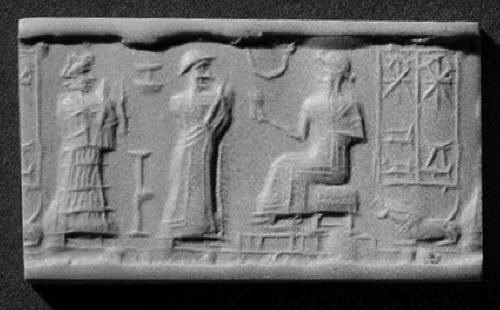
From The Marriage of Martu:
Martu went home to his own mother, and spoke to her: "My mother,
find me a wife to marry and I will bring you my ration." His own
mother replied to Martu: ... my son, I will give you advice; may my
advice be heeded. I shall say a word to you; you should pay
attention to it. Marry a wife of your choice, marry a wife of your
heart's desire...
... Martu ... strode around the great courtyard to compete in
wrestling at the gate of Inab. They kept looking for strong fighters
for him, they kept offering him strong fighters. ... He hit them ...
one by one. In the great courtyard, in the battle he caused them to
be bandaged; in the great courtyard ... he lifted the bodies of the
dead.
Rejoicing over Martu, (the god) Numucda offered him silver, but he
would not accept it. He offered jewels, but he would not accept
them. Having done so a second time, having done so a third time (Martu
says): "Where does your silver lead? Where do your jewels lead? I,
Martu, would rather marry your daughter, I would rather marry your
daughter...."
We hope you enjoyed reading a bit of Enheduanna's work, the world's earliest known author and poet.
Interested in ancient texts staring women? Read Lysistrata, one of the most famous and most popular plays of the great comic writer Aristophanes (456-386 BC) which tells the story of how the women from the Greek city states decide to take over the public treasury in Athens and to stop having sex with their husbands until the men agree to stop fighting a destructive civil war. Written in 411 BC, when the Athenians and the Spartans had been at war for about twenty years, the play is celebrated not only as an extremely funny and frank comedy but also as a major landmark of feminist and pacifist literature.
When the future meets the past:
The Lycurgus Cup
 |
The Lycurgus Cup is a glass chalice dating to 4th century Rome made of dichroic glass (glass which shows different colors when viewed from different directions.) It appears red when lit from behind, but green when lit from the front...read article here...