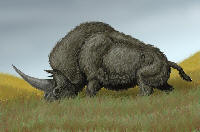
The Siberian Unicorn
|
For 200 years, it was thought Elasmotherium sibericum, The Siberian Unicorn, went extinct 350,000 years ago. Now we know they were walking the earth at the same time we were...read article here... |
____________________________
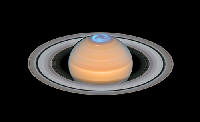
Cassini
|
The space probe Cassini went on a 20-year voyage to study Saturn's secrets and as a result, our knowledge has grown, well, astronomically, one might say. Here is some of what we learned...read article here... |
____________________________
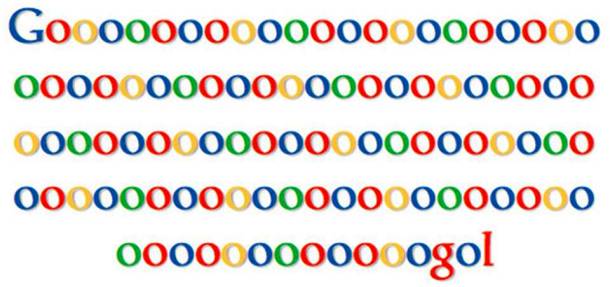
Google vs. Googol
|
Whether you spell it Google or Googol, we are talking about massive numbers. And, what exactly is a Googol?...read article here... |
____________________________
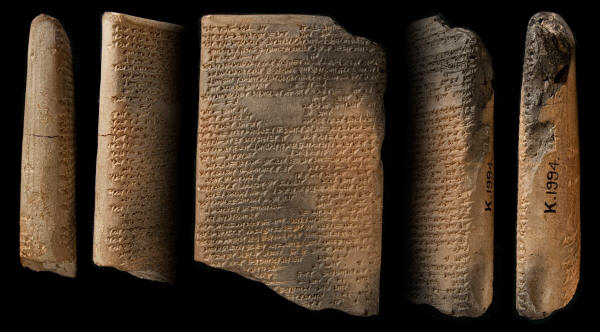
The World's Oldest Royal Library
|
The Library of Alexandria is one of the largest and most important libraries in Earth's history, however, it is not the oldest by more than 5 centuries. The Royal Library of Ashurbanipal which holds more than 30,000 cuneiform tablets...read article here...
|
At Richer Resources, we are dedicated to the creation of high quality books, art and other media intended to enrich the lives of individuals of all ages.
As an independent publisher, we are bound by a sense of integrity and quality to produce products which enhance the lives and vision of individuals everywhere.
Sign up to receive notice of free eBooks, new releases and special subscriber-only offers.
(You can unsubscribe at any time)
Sign up to receive our newsletter and receive a coupon for 10% off your next purchase.
Hermes "Jack off All Trades"
Ancient Greece offered one of the earliest forms of democracy in the Western world, followed soon after by the Roman Republic (509 BC). And, as most of us know, our Founding Fathers patterned the U.S. government on these forms of governing. Intrinsic in a democracy is the action of voting.
Today, as a nation, we vote and elect officials into power with the idea that they will govern for us. We live in a representative democracy. Some states and local communities at times grant citizens the power to vote directly on spending proposals and bond approvals. In some states, referendums and propositions can be voted on by the population at large and are then presented to the state legislature for consideration or even obtain passage by popular vote. This is a type of "direct democracy," sometimes known as "pure democracy."
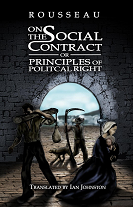
Although this is not our current form of government and is not the democracy envisioned or created by the framers of the Constitution, it is the oldest form of government in the United States. In On the Social Contract (1762), Jean Jacques Rousseau was among the influential thinkers who championed this form of government for small states (though not for large ones). Through their own study of history, our founding fathers decided that a direct democracy produced only the will of the mob and, over time, was doomed to the very tyranny it sought to outstep. It was this belief that led to the creation of the establishment of the representative democracy we now have. Nineteen states, however, still use direct democracy in some form to this day.
Despite the fact that voting is a civic duty and one of the few ways citizens can determine their own leadership, in the United States, only 55 to 60 percent of eligible voters actually go the polls in presidential years, and only 35 to 50 percent do so in midterm elections, far fewer than in most developed countries.
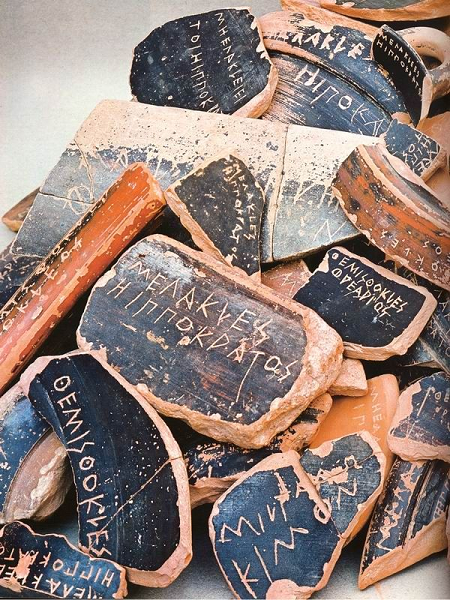
Although we have inherited many of our ideas about democracy from the ancients, the manner of voting has changed. Athenians used pottery shards to vote their electors into office as well as to ostracize people or run them out of town by majority vote. Today, we use a variety of ballot types, paper ballots, mechanical voting machines, punch cards, digital recording electronics, and optical scans being the most common. Whatever form of ballot your community offers, we encourage you to celebrate your right to vote and make your vote count. Our future as a democratic republic depends on citizens performing this duty.
__________________________________________________________________________________________________
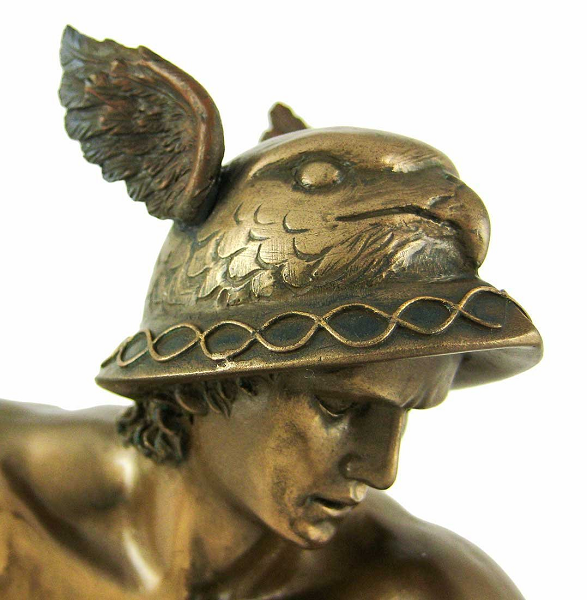
Hermes was the ancient god of trade, luck, wealth, fertility, commerce, markets, and roads. But that wasn't enough: he was also the protector of herdsmen and of all animal husbandry. He was the god of sleep, of travelers and travel, of rogues, thieves, and all secret dealings. He was the god of language, of translators and interpreters. The god of sleep, he was the one who conducted the dead to their ultimate destination.
Hermes possessed the usual powers of an Olympian: superhuman strength, durability, stamina, agility, and reflexes. He was, or should we say is, immortal as well as resistant to all terrestrial diseases. Hermes was able to run and fly at speeds exceeding those of any other Olympian god or goddess, and he moved quickly and freely between the worlds of the mortal and the divine.
Clever and mischievous, Hermes invented the lyre and, most important, was the messenger for the gods of Mount Olympus. He was the fastest of the gods and wore winged sandals and a winged hat and carried a magic wand.
As the centuries have worn on, others have assigned other skills and duties to him, too numerous and varied to detail here.
To the Greeks, he was Hermes; to the Romans, he was known as Mercury, but his abilities were the same.
Hermes had multiple lovers, and with the nymph Penelopeia produced Pan, god of the wild, of shepherds and flocks, nature, and rustic music.
The mythological prowess of this many-talented god did not begin with the ancient Greeks and Romans, however. Hermes has a much older history, having been mentioned as early as the Mycenaean civilization in tablets dating to between the 15th and 13th centuries BCE. With origins so ancient, the Greeks believed him to have been the son of Zeus and Maia, daughter of the Titan Atlas. And because he originated so long ago, the Greeks credited Hermes with inventing fire, the alphabet, and (from the sublime to the ridiculous) knucklebones, a game of chance played using five small objects.
As the gods' personal herald and diplomatic messenger, Hermes was, in a sense, the bringer of peace.
Any age, it seems, could use such a god as this.
__________________________________________________________________________________________________
The Odyssey tells the story of famous Odysseus, hero of ancient Greece, and his 20 year wandering return from the Trojan War. Beset by heartache and diversion, Odysseus' story is one of adventure, glory and despair of one man's determination to return home and of the times in which he lived. Timeless in the telling, it depicts an age when mythology and truth merged into reality in literary form...more
____________________________
Long hailed as one of the most original, controversial, and influential works of modern political theory, Jean-Jacques Rousseau’s On the Social Contract or Principles of Political Right (1762) sets out to address an apparently insoluble difficulty: how can we organize a political community so as to guarantee its members the complete physical and emotional freedom given to them by nature, while at the same time ensuring peaceful order and cooperation within the state. How can we “find a form of association which defends and protects with full communal force the person and the possessions of each member and in which each person, by uniting with all, nevertheless obeys only himself and remains as free as before.”