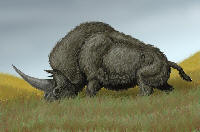
The Siberian Unicorn
|
For 200 years, it was thought Elasmotherium sibericum, The Siberian Unicorn, went extinct 350,000 years ago. Now we know they were walking the earth at the same time we were...read article here... |
____________________________
Cassini

|
The space probe Cassini went on a 20-year voyage to study Saturn's secrets and as a result, our knowledge has grown, well, astronomically, one might say. Here is some of what we learned...read article here... |
____________________________
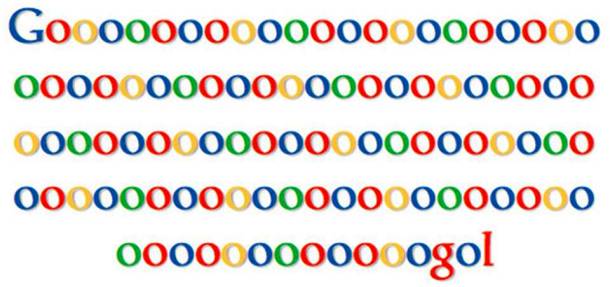
Google vs. Googol
|
Whether you spell it Google or Googol, we are talking about massive numbers. And, what exactly is a Googol?...read article here... |
____________________________
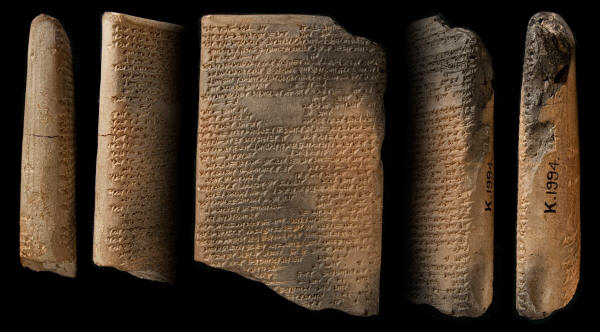
The World's Oldest Royal Library
|
The Library of Alexandria is one of the largest and most important libraries in Earth's history, however, it is not the oldest by more than 5 centuries. The Royal Library of Ashurbanipal which holds more than 30,000 cuneiform tablets...read article here...
|
At Richer Resources, we are dedicated to the creation of high quality books, art and other media intended to enrich the lives of individuals of all ages.
As an independent publisher, we are bound by a sense of integrity and quality to produce products which enhance the lives and vision of individuals everywhere.
Sign up to receive notice of free eBooks, new releases and special subscriber-only offers.
(You can unsubscribe at any time)
Sign up to receive our newsletter and receive a coupon for 10% off your next purchase.
Inspiration during quarantine

Two people in western history were particularly productive during
times of epidemic: Isaac Newton and William Shakespeare.
Quarantined at home during England's 1665 bubonic plague and only in
his early 20s at the time, Isaac Newton produced what would become
the foundations of his breakthrough theories on calculus, optics,
and the laws of gravitation. Quarantine, it would seem, agreed with
him. Relatively undistinguished during his four years at Cambridge,
Newton blossomed in the solitude of his home, as his research and
ingenuity laid the groundwork for some of the most important
breakthroughs in the fields of mathematics and science, even to this
day.
In the world of the arts, there is some indication that William
Shakespeare wrote “King Lear” while in quarantine. (The play, as you
may know, was based on the legendary King Leir of the Britons, who
reigned in the 8th century B.C, around the time of the founding of
Rome.) The bubonic plague of 1606 forced London's theaters and
playhouses to close. Although Shakespeare doesn't appear to have
quarantined himself for this particular outbreak as he had
previously, he did become very prolific while the Globe Theater was
closed, producing “King Lear,” “Macbeth,” and “Anthony and
Cleopatra,” while also cavorting through the countryside as his
merry troupe toured the provinces performing with his roaming
company, The King's Men.
Earlier, during the bubonic plague
outbreak of 1564, Will was only 3 months old. Previous outbreaks had
taken the lives of his parents’ two older children, and they were
taking no chances with young Will. They locked their doors and
windows and allowed no one to come inside until the danger had
passed. Not taking these precautions may have denied the world the
life and works of William Shakespeare.
__________________________________________________________________________________________________
The Census through history
Counting people and collecting information about a country’s
population goes back to the ancient world. The Babylonians, Chinese,
Egyptians, Greeks, and Romans all counted their populations to
provide information for military and taxation purposes. The first
time any kind of census was taken in Britain was the Domesday Book
of 1086. However, this was really to collect information on land
rather than on people.
In ancient times, the Egyptians used this type of information in
building the pyramids and giving out land following the annual
flooding of the Nile. The Romans also had regular censuses. In the
nativity story, for example, Joseph and Mary had to travel to
Bethlehem to take part in the census ordered by Caesar Augustus,
which required every man in the Roman Empire to return to his
birthplace and be counted.
Medieval Europe saw several attempts at data collection through
1585, but no further official attempts to count the population were
made until the late 1700s in England. At that time, there was
general worry about the rise in population and a fear that the
country would not be able to feed itself. Since no one had any
accurate information on the number of people living in the country,
the government ordered that a census be taken. As a result, the
first modern census in the UK took place in 1801. In the United
States, censuses had been taken prior to ratification of the
Constitution; in the early 17th century, a census was taken in
Virginia, and people were counted in almost all of the British
colonies that became the United States.
Knowing how many people were living in the country was obviously
helpful to the government, but over time it was realized that having
other kinds of information would also be of use. For example,
knowing how many people were living in overcrowded conditions would
help the government in making new laws to deal with the problem.
Today the census form asks for information on topics such as age,
ethnic background, housing, size of family, work, and transport so
that the federal government and local authorities can find ways
to meet the needs of all the population.
__________________________________________________________________________________________________

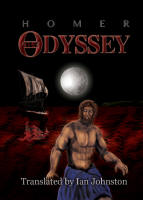
The Odyssey tells the story of famous Odysseus, hero of ancient Greece, and his 20 year wandering return from the Trojan War. Beset by heartache and diversion, Odysseus' story is one of adventure, glory and despair of one man's determination to return home and of the times in which he lived. Timeless in the telling, it depicts an age when mythology and truth merged into reality in literary form...more
____________________________
has long been regarded, not only as Sophocles' finest play, but also as the purest and most powerful expression of Greek tragic drama. In this new verse translation, Ian Johnston captures the compelling tension of Sophocles' drama, the intense poetic vision which has made this play justly celebrated as one of the great masterpieces of Western literature...more